Best Light for Planted Tank: A Guide to Strong Plant Growth
7 min read · 2026-10-19
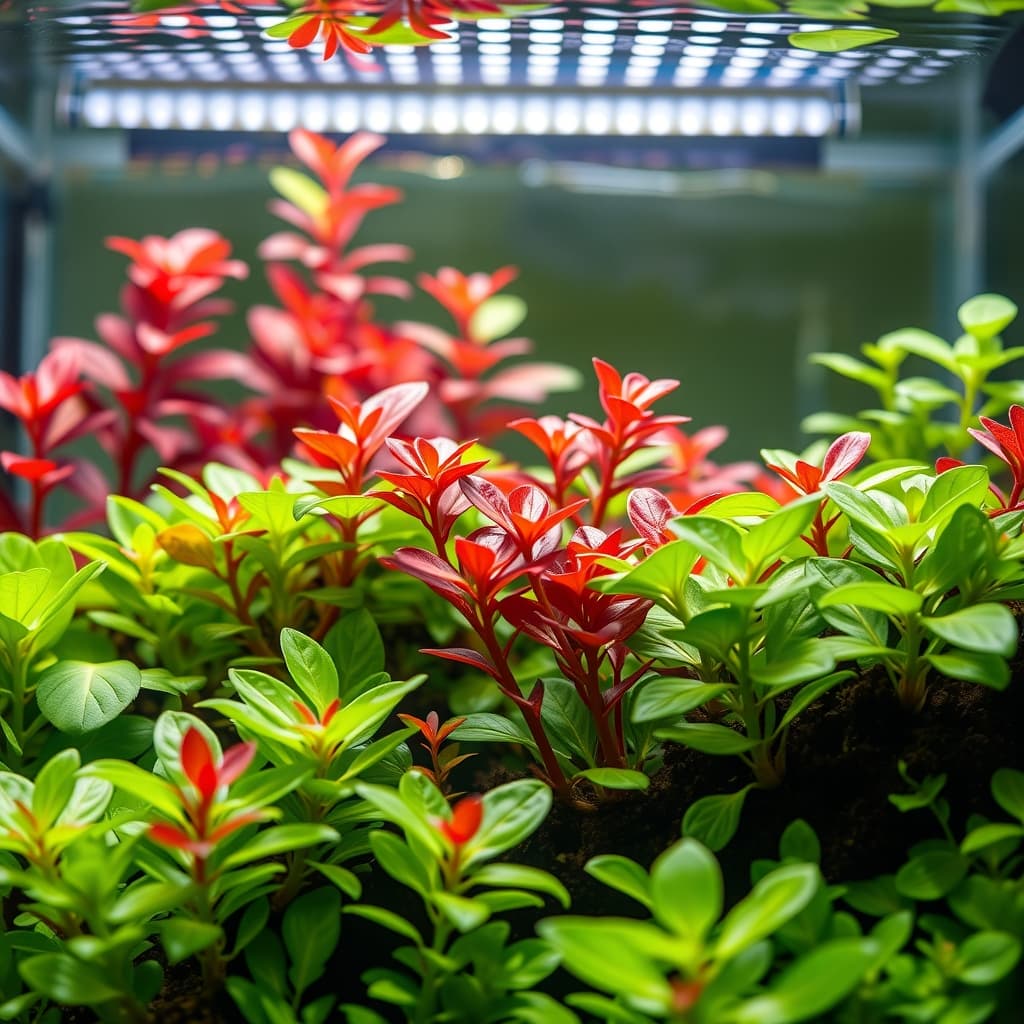
The best light for a planted tank delivers the correct intensity and spectrum for your specific plants. It helps them thrive without fueling rampant algae growth. Forget flashy marketing claims and focus on what actually grows plants.
For most beginner to intermediate planted tanks (up to 60 cm wide) aiming for lush growth without CO2, a solid, reliable LED bar like the Aurora 48 Planted Tank LED Bar is an excellent choice. If you're building a nano tank, the Clip-On Nano Grow Light saves money and space. For larger tanks or if you want advanced control and full spectrum for demanding plants, look at options like the Aurora Pro RGB, Bluetooth, IP68.
What Makes a Light Good for Planted Tanks?
You need to understand three things: PAR, spectrum, and intensity. Ignore vague "wattage per gallon" rules. They are useless.
PAR: Photosynthetically Active Radiation
PAR measures the amount of light plants actually use for photosynthesis. It's not about how bright the light looks to your eyes. It's about the light energy hitting your plants. A good light delivers enough PAR to the substrate, where most plants root.
- Low Light: 15-30 PAR at the substrate. Good for Anubias, Java Fern, Mosses.
- Medium Light: 30-60 PAR at the substrate. Suits most stem plants, Cryptocorynes, Swords.
- High Light: 60+ PAR at the substrate. For demanding plants, red plants, carpeting plants. Requires CO2 injection.
Without a PAR meter (they are expensive), you rely on manufacturer claims or experienced hobbyist recommendations. Be skeptical. More expensive does not always mean higher PAR where it matters.
Spectrum: The Colors Plants Use
Plants primarily use red and blue light for photosynthesis. Green light is mostly reflected, which is why plants appear green to us. "Full spectrum" lighting means the light emits across the entire visible spectrum, often with peaks in the red and blue ranges. This makes plants look vibrant and supports healthy growth.
- Red Light (600-700 nm): Crucial for flowering, fruiting, and overall plant growth.
- Blue Light (400-500 nm): Essential for vegetative growth and compact plant structure.
- Green Light (500-600 nm): Less critical for photosynthesis but contributes to plant health and makes the tank look good.
Many cheap lights just have white LEDs. Better lights add specific red and blue diodes to enhance growth and color. The Aurora 48 Planted Tank LED Bar, for example, uses 30 white and 10 blue LEDs to provide a good balance.
Intensity and Duration
Intensity is simply how strong the light is. Duration is how long it stays on. Too much intensity or too long a duration, and you get algae. Too little, and plants melt.
Start with 6-8 hours a day. Adjust as needed. If algae appears, reduce duration or intensity. If plants are leggy or pale, increase intensity or duration slightly. This is an art, not a science.
LED vs. Other Lighting Types for Planted Tanks
LEDs are the only sensible choice for planted tanks today. Incandescent bulbs are a joke. Fluorescent tubes (T5, T8) are outdated, less efficient, and cost more to run and replace.
- Efficiency: LEDs use less power for the same light output. This saves you money on electricity.
- Lifespan: LEDs last for years, often a decade or more, before dimming significantly. Fluorescents need replacing annually.
- Customization: Many LEDs offer adjustable intensity, spectrum control (RGB), and built-in timers.
- Heat: LEDs produce less heat than other options, which helps keep your tank temperature stable.
- Size: LEDs are compact and sleek, fitting better with modern aquarium aesthetics.
Don't bother with anything but LEDs. They are better in every way.
Matching a Light to Your Tank Size and Plant Needs
Your tank's dimensions and the types of plants you want to grow dictate the best light. Size matters, but so does your ambition.
Nano Tanks (under 30 liters / 8 gallons)
These small tanks don't need powerful lights. A simple, clip-on light is often enough. The Clip-On Nano Grow Light is perfect for this. It's cheap, compact, and provides enough light for most nano plants like Anubias nana, Bucephalandra, and smaller mosses. Don't overdo it with a huge light; you'll just invite algae.
Small to Medium Tanks (30-90 liters / 8-24 gallons)
This is where most hobbyists start. You need a light bar that spans the tank width. The Aurora 48 Planted Tank LED Bar fits tanks 48–61 cm (19–24 inches) wide. It has a timer and offers white and blue light modes. This is a solid, no-nonsense option for a medium-light setup. If you're completely new, consider the Planted Starter Bundle, Light, Tools, Test Kit, which includes this light along with essential tools and test strips.
Larger Tanks (90+ liters / 24+ gallons) and High-Tech Setups
For wider tanks or if you're chasing truly demanding plants (carpeting plants, vibrant reds), you need more power and often more control. Lights like the Aurora Pro RGB, Bluetooth, IP68 or the Aurora Smart 78, RGB App-Controlled LED offer full spectrum RGB control via a phone app. This lets you fine-tune colors for plant growth and aesthetics. The Aurora Smart 78, for instance, has 34 W of power and fits tanks 70–95 cm (28–37 inches) long. The Aurora Pro RGB is silicone sealed with an IP68 rating, meaning it's fully waterproof, a nice safety feature if you're prone to splashes.
Remember, high light requires CO2 injection. Don't buy a powerful light without planning for CO2, or you'll battle algae constantly. Check out a CO2 Starter Kit if you're going high-tech.
Understanding Light Features: Are They Worth the Money?
Modern LED lights come with a range of features. Some are genuinely useful; others are just fluff.
Built-in Timers
Essential. Plants need a consistent light cycle. A built-in timer, like on the Aurora 48 Planted Tank LED Bar, saves you from buying an external one. If your light doesn't have one, get a cheap mechanical timer from a hardware store. It's non-negotiable.
RGB Color Control and App Control
Lights like the Aurora Pro RGB, Bluetooth, IP68 and Aurora Smart 78, RGB App-Controlled LED offer RGB control. This means you can adjust the red, green, and blue channels independently. It's great for:
- Fine-tuning spectrum: Optimize for specific plant types or growth phases.
- Aesthetics: Boost reds for vibrant plant colors or shift to warmer/cooler tones.
- Sunrise/Sunset modes: Gradually brighten and dim, reducing stress for fish and mimicking natural cycles.
Is it necessary? No. Is it nice to have for a high-end tank? Absolutely. For a basic tank, a simple white/blue light is fine. Don't pay extra for RGB if you just want things to grow.
Dimming and Intensity Control
Very useful. Being able to dim your light lets you adjust for algae outbreaks or new plant setups. It's a key tool for light management. Most app-controlled lights include this. Cheaper lights might have simple high/low settings. Any control is better than none.
Waterproofing (IP Rating)
An IP rating indicates how resistant a device is to dust and water. For aquarium lights:
- IP44: Splash resistant. Fine for lights sitting on the tank rim, but don't submerge them. The Aurora Smart 78 is IP44.
- IP68: Fully submersible. This is the gold standard for safety around water. The Aurora Pro RGB has an IP68 rating. It means the light is silicone sealed and can withstand being fully submerged. This is a good feature for peace of mind, especially if you have an open-top tank or are prone to splashing during maintenance.
You don't need a submersible light if it sits securely on the rim and you're careful. But IP68 offers an extra layer of protection.
Avoiding Common Lighting Mistakes
Getting the right light is only half the battle. Using it correctly is critical.
Too Much Light
The most common mistake. Too much light without enough CO2 and nutrients leads to rampant algae. You are trying to grow plants, not green slime. If your plants are melting and algae is exploding, your light is probably too strong or on for too long. Reduce intensity or duration. For new setups, start low and slow.
Inconsistent Photoperiod
Plants thrive on consistency. An erratic light schedule stresses them and can lead to algae. Use a timer. Every day, the light should come on and go off at the same time.
Ignoring Maintenance
Algae will grow on your light bar and diffuser. Wipe it clean regularly. A dirty light means less light reaching your plants. It's simple maintenance, but often overlooked.
Not Understanding Your Plants' Needs
Don't try to grow high-light plants in a low-light tank. Research your plants. Match your light to what you want to grow. Trying to force a carpet of Glossostigma with a basic desk lamp is a waste of time and money.
For more on managing your tank, including algae and water quality, check out our guide on aquarium water testing. Understanding your water parameters helps you keep things balanced, reducing algae and improving plant health. More lighting options are available on our lighting collection page.
Quick answers
- How many hours a day should I run my planted tank light?
- Start with 6-8 hours daily. If you see algae, reduce the duration. If plants look leggy or pale, increase it slowly. Consistency with a timer is key.
- Do I need a "full spectrum" light?
- "Full spectrum" is a common marketing term. What matters is that the light provides sufficient red and blue wavelengths for plant photosynthesis. Many good LED lights achieve this without being labeled "full spectrum."
- What is PAR and why is it important?
- PAR (Photosynthetically Active Radiation) measures the light energy plants actually use for photosynthesis. It's a more accurate way to gauge a light's effectiveness for plant growth than lumens or watts.
- Is more powerful light always better for plants?
- No. Too much light without adequate CO2 and nutrients will cause severe algae problems, not better plant growth. Match light intensity to your plants' needs and your tank's CO2 setup.