Aquarium Water Test Kit Digital: Are They Worth It?
8 min read · 2026-11-03
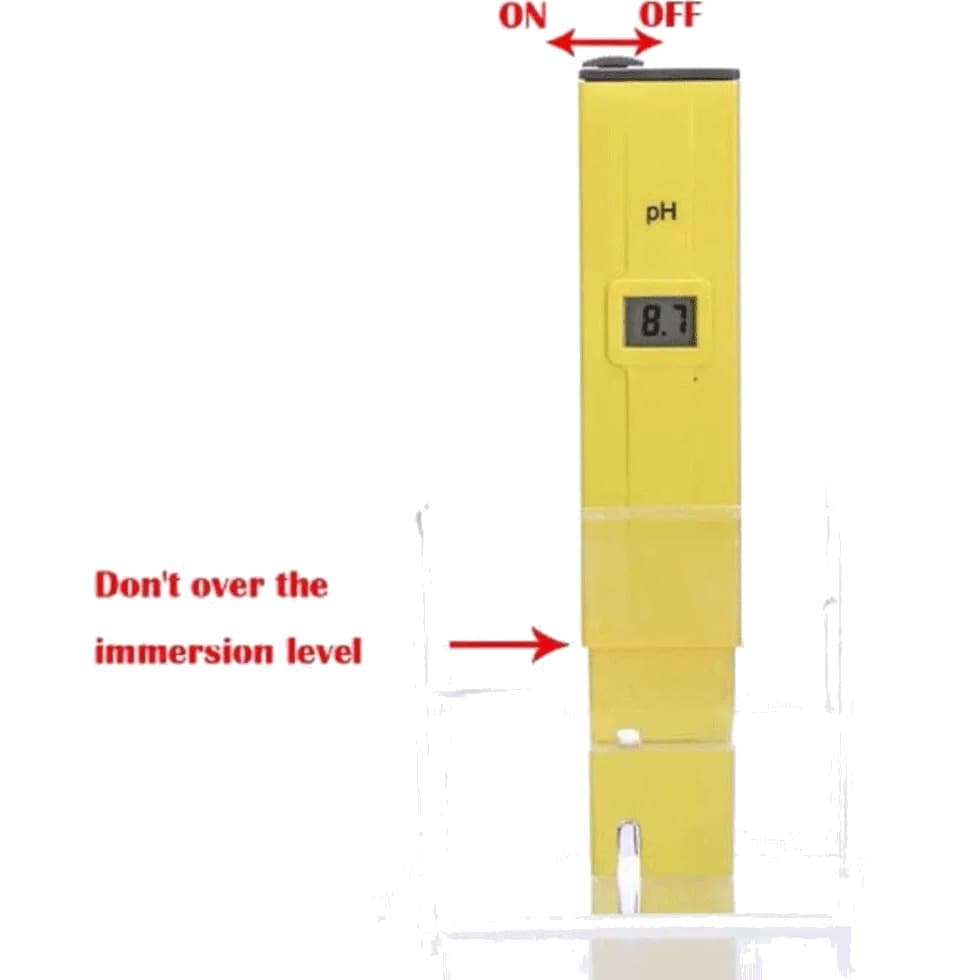
The gear this guide is about
Digital pH Meter — LCD
$18
Aquarium Water Test Kit Digital: Are They Worth It?
Digital aquarium test kits are not a complete solution for comprehensive water testing in a planted tank. They excel at measuring specific parameters with precision, but they miss crucial indicators of water health that other test methods cover. You will still need test strips or liquid kits for a full picture of your aquarium's chemistry.
What Do Digital Aquarium Test Kits Actually Measure?
When you search for "digital aquarium test kit," you're primarily looking at devices that measure pH, electrical conductivity (EC), or temperature. These are specialized tools, not all-in-one solutions.
For pH, you have options like the Digital pH Meter, LCD for $17.95 or the Digital pH Pen Meter for $19.95. Both offer excellent precision for pH readings. The Digital pH Pen Meter measures pH only, with a range of 0.00, 14.00 pH and a resolution of 0.1 pH. This kind of accuracy is hard to beat with color-matching test strips.
A more advanced option is the 4-in-1 pH / EC Meter for $24.95. This device goes beyond just pH, adding Electrical Conductivity (EC) to its measurements. EC is useful for tracking the total dissolved solids (TDS) in your water, which can indicate nutrient levels or the purity of your source water. If you're using reverse osmosis (RO) water and remineralizing, an EC meter helps you hit your target mineral content consistently.
Another useful digital tool is the Digital Thermometer with Probe, priced at $15.95. While not a chemical test kit, it provides highly accurate temperature readings for your aquarium. It has a resolution of 0.1 °C and an accuracy of ±1 °C, with a 1 m sealed probe for accurate placement. Keeping track of temperature is vital for the health of both plants and fish, and a digital thermometer offers clear, easy-to-read numbers compared to traditional glass thermometers.
Why Digital Kits Aren't a Complete Solution for Planted Tanks
The biggest limitation of digital test kits is their narrow focus. While they nail pH, EC, and temperature, they leave out many other critical water parameters. For a thriving planted aquarium, you need to monitor:
- General Hardness (GH): This measures the concentration of calcium and magnesium ions, essential minerals for plant growth and fish health.
- Carbonate Hardness (KH): KH acts as a buffer against pH swings. Stable KH is crucial for consistent CO2 dosing and preventing dangerous pH crashes.
- Nitrate (NO3): A primary plant nutrient, but too much can harm fish and encourage algae.
- Nitrite (NO2): Highly toxic to fish, indicating a problem with your nitrogen cycle.
- Ammonia (NH3/NH4): Extremely toxic, the first indicator of a cycling issue or overfeeding.
None of the available digital meters, such as the Digital pH Pen Meter or the 4-in-1 pH / EC Meter, will test for these parameters. To get these readings, you'll need traditional methods. Test strips, like the 7-in-1 Aquarium Test Strips, GH & KH, 100 Count, offer a quick way to check multiple parameters at once for $12.95. These strips provide results for GH and KH, alongside other parameters. For more precise readings on nitrates, nitrites, and ammonia, liquid test kits (which are not available in stock here, but commonly used) are typically the next step up from strips in terms of accuracy.
Relying solely on a digital pH meter means you're flying blind on crucial aspects of your water chemistry. You might have perfect pH, but dangerously high ammonia or nitrates, which would kill your livestock and plants.
When is a Digital pH Meter Worth the Money?
Despite their limitations, digital pH meters are valuable tools for specific situations where precision pH monitoring is key. They are not just fancy gadgets; they serve a real purpose in advanced setups.
If you're injecting CO2 into your planted tank, precise pH measurement is non-negotiable. CO2 injection lowers pH, and too much CO2 can suffocate your fish. A digital pH meter, such as the Digital pH Pen Meter with its 0.1 pH resolution, allows you to monitor pH changes with much greater accuracy than a color-chart test strip. This precision helps you fine-tune your CO2 levels, keeping your plants happy and your fish safe. You can react to small pH shifts before they become major problems.
For maintaining very specific water parameters for sensitive plants or fish species, a digital pH meter provides the consistent, accurate data you need. Some plants thrive only within a narrow pH range. With a digital meter, you can track those subtle changes and adjust your water chemistry proactively, rather than guessing with broad color comparisons.
Consider the Digital pH Meter, LCD at $17.95, or the slightly more expensive Digital pH Pen Meter at $19.95. Both give you numbers, not colors. That eliminates the subjectivity of matching a color strip to a chart, especially in different lighting conditions. This makes a huge difference for consistent data collection over time.
While a pack of 7-in-1 Aquarium Test Strips costs $12.95 for 100 tests and includes pH, the pH reading on strips is often a broad approximation. If you need to know if your pH is 6.8 or 7.0, a digital meter will tell you directly. A strip might only indicate "around 6.5-7.0."
The Real Cost of Digital vs. Simpler Test Kits
When considering a digital test kit, it's not just about the upfront purchase price. You need to factor in ongoing costs and compare them to simpler, often cheaper, alternatives.
Let's look at initial costs: A Digital pH Meter, LCD is $17.95. The Digital pH Pen Meter is $19.95. For comparison, a pack of 7-in-1 Aquarium Test Strips, which includes pH, GH, and KH, costs $12.95 for 100 tests. Immediately, the strips seem like a more economical choice, especially since they cover more parameters.
However, the value proposition changes depending on your needs. For just pH, the digital meters offer superior precision. For a comprehensive overview of multiple parameters, the strips are cheaper per test and provide a broader (though less precise) spectrum of information.
Digital meters also have ongoing costs. The Digital pH Pen Meter requires 2 × 1.5 V cells for power, and the Digital Thermometer with Probe uses 1×LR44 battery. These batteries will need replacing. More importantly, digital pH meters require regular calibration. The Digital pH Pen Meter uses buffer powder for its two-point calibration. You'll need to purchase these calibration solutions periodically, adding to the long-term cost. Without proper calibration, your precise digital meter becomes an inaccurate, expensive paperweight.
Test strips, on the other hand, have no ongoing costs beyond purchasing new packs once you run out. They are disposable and require no maintenance. Liquid test kits (not in stock here) also have a shelf life and can be more expensive per parameter than strips, but typically offer better accuracy than strips without the need for calibration solutions.
The trade-off is clear: digital meters offer high precision for specific parameters but come with higher ongoing maintenance and a narrower scope. Test strips are cheaper, cover more, but sacrifice accuracy. Your choice should align with what parameters are most critical for your tank and your budget for ongoing supplies.
Calibration and Maintenance for Digital Meters
Owning a digital pH meter is not a "set it and forget it" situation. These tools require proper care and regular calibration to maintain their accuracy. Ignoring these steps will render your meter useless or, worse, provide misleading data.
The most important maintenance task is calibration. The Digital pH Pen Meter, for example, specifies a two-point calibration using buffer powder. This means you will need to calibrate it against two known pH solutions (e.g., pH 7.0 and pH 4.0 or 10.0). This process corrects any drift in the meter's sensor over time, ensuring your readings remain accurate. How often you calibrate depends on how frequently you use the meter and how critical the accuracy is for your setup, but at least once a month for active users is a good rule of thumb.
Beyond calibration, the electrode (probe) of a digital pH meter needs care. It must be kept moist. Allowing the probe to dry out can damage it and affect its performance, leading to erratic or inaccurate readings. Most digital pH meters come with a storage solution or a cap designed to keep the probe hydrated. Never store the probe dry. If it does dry out, it might be possible to rehydrate it in a storage solution, but performance may be permanently affected.
Keeping the probe clean is also important. Algae or mineral buildup on the electrode can interfere with readings. Gentle cleaning with distilled water or a specialized electrode cleaning solution can prevent this. Always follow the manufacturer's instructions for cleaning to avoid damaging the delicate sensor.
Finally, remember to replace batteries when needed. The Digital pH Pen Meter uses 2 × 1.5 V cells, and the Digital Thermometer with Probe uses 1×LR44. Low battery power can sometimes lead to inconsistent readings before the device stops working entirely.
Your Best Bet for Comprehensive Water Testing
For most planted tank hobbyists, the best approach to water testing is a combination of tools. No single product will give you everything you need, especially not a digital kit alone.
Start with a reliable set of test strips. The 7-in-1 Aquarium Test Strips, GH & KH, 100 Count for $12.95 gives you a quick overview of GH, KH, and pH, along with other parameters. This is an excellent baseline for regular weekly checks. It helps you quickly spot any major deviations before they become serious issues. In fact, our Planted Starter Bundle includes 8-in-1 test strips, highlighting their utility for beginners and experienced hobbyists alike.
For parameters requiring higher accuracy, such as ammonia, nitrite, and nitrate (especially during tank cycling or when troubleshooting issues), invest in liquid test kits. While we don't stock them, they are widely available and provide more precise colorimetric results than strips.
Consider a digital pH meter, like the Digital pH Pen Meter, only if you have specific needs that demand its precision. If you are actively dosing CO2, or keeping very sensitive plants or fish with narrow pH requirements, then the $19.95 investment is justified. The accuracy provided by its 0.1 pH resolution is a major advantage for fine-tuning your system.
Lastly, a Digital Thermometer with Probe for $15.95 is always a good addition. Knowing your exact tank temperature with 0.1 °C resolution is simple and important for livestock health.
Don't fall for the idea that one "digital aquarium water test kit" will solve all your problems. A smart hobbyist builds a toolkit that covers all necessary parameters with appropriate levels of precision. This often means using a combination of fast, broad-spectrum tests (strips), accurate chemical tests (liquid kits), and precise digital meters for specific, critical readings.
Quick answers
- Do digital test kits replace all other aquarium water tests?
- No, digital kits typically only measure pH, EC (conductivity), or temperature. You still need strips or liquid kits for parameters like GH, KH, nitrates, and ammonia.
- How accurate are digital pH meters for aquariums?
- Digital pH meters, like the <a href="/digital-ph-pen-meter">Digital pH Pen Meter</a> with 0.1 pH resolution, offer good precision for pH, often better than test strips.
- What maintenance do digital aquarium meters require?
- Digital pH meters need regular calibration using buffer powders, as mentioned for the <a href="/digital-ph-pen-meter">Digital pH Pen Meter</a>. Their probes also need to be kept moist.
- Are digital test kits more expensive than test strips?
- An initial digital pH meter can cost more than a pack of test strips. For example, a <a href="/digital-ph-meter-lcd">Digital pH Meter — LCD</a> costs $17.95, while <a href="/gh-kh-test-strips-7in1">7-in-1 Aquarium Test Strips</a> are $12.95 for 100 tests.