Setting Up Your First Planted Aquarium
6 min read · 2026-10-24
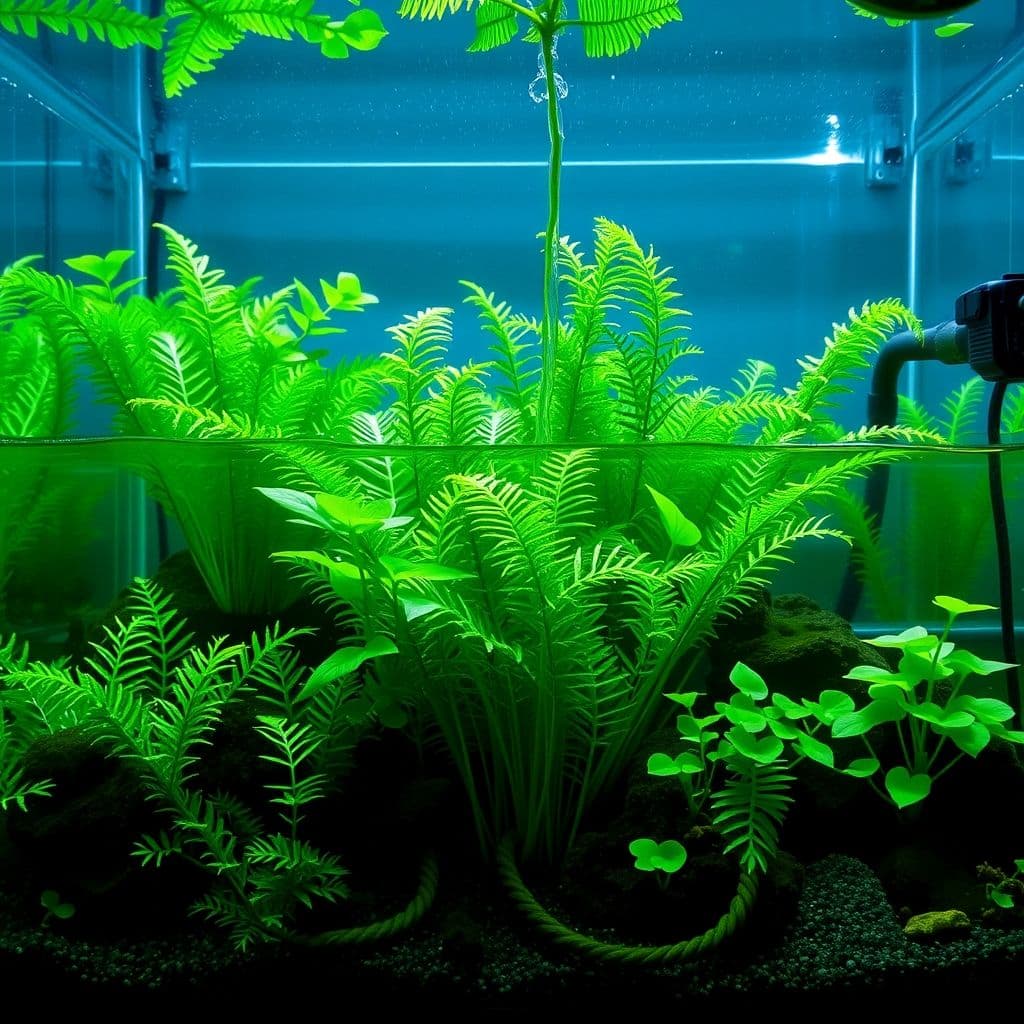
Your First Planted Aquarium: What You Actually Need
Setting up a planted aquarium for the first time can seem overwhelming, but it boils down to choosing the right gear and following a sequence. Don't waste money on products you don't need, especially when starting out.
You need a tank, obviously. Beyond that, focus on these core components:
- Lighting: This is the engine of your planted tank. Skimp here, and your plants will struggle.
- Substrate: The foundation for your plant roots. Don't just grab any gravel.
- Filtration: Essential for clear water and a healthy environment, even in planted tanks.
- Heater: Most tropical plants and fish need stable, warm water.
- Hardscape: Wood and rocks add structure and interest.
- Plants: Start with easy, low-tech options.
- Basic Tools: For planting and maintenance.
For a straightforward start, consider a bundle designed for beginners. The Planted Starter Bundle is a good example, specifically for tanks with a width between 48 cm and 61 cm. It includes the necessary light, some tools, and test strips to monitor water parameters. This takes the guesswork out of initial gear selection.
Substrate: The Foundation for Your Plants
Your substrate isn't just decoration; it's where your plants anchor and draw nutrients. Regular aquarium gravel is mostly inert, meaning it provides little to no nutrients. While some plants can manage, most will do better with a dedicated planted tank substrate.
There are two main approaches:
- Nutrient-Rich Substrate: These are specifically designed for planted tanks, often clay-based or baked soil granules. They release nutrients into the water column and provide a good rooting medium. They can be pricey, but they give your plants a strong start.
- Inert Substrate with Fertilizers: You can use a fine inert gravel or sand (less than 3mm grain size is ideal for root penetration) and supplement with root tabs. Root Fertilizer Tabs are capsules that you push into the substrate near your plant roots. Each pack contains 40 capsules, which provides localized nutrients directly where plants need them. This is often a more budget-friendly approach and gives you control over nutrient delivery.
Avoid chunky gravel. Plant roots struggle to penetrate it, and detritus can build up in the large gaps, leading to anaerobic pockets that harm roots. A fine sand or small gravel (around 1-2 mm) is best if you're not using a specific plant substrate.
Lighting: The Engine of Plant Growth
This is where many beginners go wrong. Generic aquarium lights are often not strong enough or don't have the right spectrum for healthy plant growth. Plants need specific wavelengths of light for photosynthesis. Don't just buy the cheapest LED bar you find.
You need a light designed for planted tanks. For a beginner setup, something like the Aurora 48 Planted Tank LED Bar is a solid choice. It's a 20 W light with 40 LEDs (30 white, 10 blue) and fits tanks between 48 cm and 61 cm wide. It also has a built-in timer, which is critical for consistent light cycles, plants need a regular "day" and "night."
For larger tanks, or if you want more control over the light spectrum, consider the Aurora Smart 78, RGB App-Controlled LED. This light is 34 W, puts out 4200 lm, and has a high CRI 90Ra rating for excellent color rendering. It fits tanks from 70 cm to 95 cm and allows you to adjust RGB colors via a phone app. This kind of control is great for fine-tuning plant growth and fish coloration, but it's more advanced than a simple white/blue light.
Start with a photoperiod of 6-8 hours a day. Too much light too soon can trigger algae outbreaks, especially in a new tank. You can gradually increase it to 8-10 hours as your tank matures and plants establish.
Filtration and Water Flow for Healthy Plants and Fish
Even with plants, you need filtration. Filters remove physical debris, provide surface area for beneficial bacteria (which process fish waste), and create water movement. Good water flow is essential to distribute nutrients to your plants and prevent stagnant areas.
For most beginner tanks, a hang-on-back (HOB) filter or a small canister filter will work. Choose one rated for your tank size, or slightly larger. Look for filters that allow you to customize media, you want mechanical filtration (sponge) and biological filtration (ceramic rings or bio-balls). Chemical filtration (activated carbon) is optional and often not needed long-term in a planted tank, as plants themselves help purify the water.
While not strictly necessary for beginners, if you upgrade to a canister filter later, you might consider aesthetics. The Glass Lily Pipe Set offers a clear, subtle look for your filter's inflow and outflow. It's made of borosilicate glass and fits common 12/16 mm or 16/22 mm tubing. For a more robust, long-lasting option, the Stainless Lily Pipe Set is made from 304 stainless steel, offering durability and a sleek, brushed finish for the same tubing sizes.
Ensure your filter provides gentle flow that circulates water throughout the tank without blasting your plants. Too strong a current can stress delicate plants and some fish.
Hardscape and Planting Strategies
Hardscape refers to the non-living elements in your tank: rocks and wood. These provide structure, focal points, and places for plants to attach. Natural elements like Spider Wood - Centrepiece Set offer intricate branching forms that look great and provide surfaces for beneficial bacteria and perching spots for fish. Each piece of spider wood is unique and weighs under 1 kg.
When selecting hardscape, make sure it's aquarium-safe. Avoid rocks with sharp edges that could injure fish, and boil or soak wood to remove tannins (which can stain water) and help it sink.
For planting, start with robust, easy-to-grow plants. Good beginner options include Java Fern, Anubias, Cryptocoryne, Swords, and Vallisneria. These plants tolerate a range of water parameters and don't demand high light or CO2.
- Foreground plants: Low-growing, like dwarf sagittaria.
- Midground plants: Medium height, like Anubias or Cryptocoryne.
- Background plants: Tall plants, like Swords or Vallisneria, which grow to the surface.
Use an Aquascaping Tool Set - 5 Piece for planting. This set includes 5 stainless steel tools, weighing 291 g, which makes placing delicate plants without disturbing the substrate much easier than using your hands. Long tweezers are invaluable for getting plants into place, and curved scissors are perfect for trimming later.
Plant heavily from the start. A dense planting helps prevent algae by outcompeting it for nutrients. Don't worry about getting it perfect on day one; your layout will evolve.
Cycling, Maintenance, and Fertilization
Before adding any fish, you must cycle your tank. This process establishes the beneficial bacteria colony that converts toxic ammonia and nitrite into less harmful nitrate. This takes several weeks. You can use an ammonia source (like pure ammonia or fish food) to feed the cycle. Test your water regularly with a kit to monitor ammonia, nitrite, and nitrate levels. Ammonia and nitrite should drop to zero before you introduce fish.
Once cycled, maintenance is key. Perform weekly water changes of 25-30% to remove nitrates and replenish trace elements. Use a gravel vacuum to clean detritus from the substrate surface, but be gentle around plant roots.
Even with a nutrient-rich substrate, plants will eventually deplete available nutrients. This is where fertilizers come in. For a beginner planted tank:
- Root Tabs: As mentioned, Root Fertilizer Tabs are great for heavy root feeders like swords and crypts. Replace them every few months.
- Liquid Fertilizers: An All-in-One Liquid Plant Fertilizer provides NPK (nitrogen, phosphorus, potassium) and essential micronutrients directly into the water column. Dose according to the product instructions, usually once or twice a week after a water change.
Start with a conservative dosing regimen. Observe your plants. If leaves look pale or growth slows, you might need more. If algae is booming, reduce light or fertilizer. It's a balance you'll learn over time.
CO2 injection is often presented as essential for planted tanks, but it's not for a beginner setup. Many beautiful aquariums thrive without it. If you choose to explore CO2 later, a CO2 Starter Kit - Regulator, Diffuser & Checker includes the main components like a dual-gauge regulator, inline atomiser, and a glass drop checker, but note that the CO2 cylinder itself is not included. This is an upgrade for when you're ready for more demanding plants.
Remember, planted tanks are a journey. Start simple, learn from your observations, and enjoy the process of creating a living underwater landscape.
Quick answers
- Do beginners need CO2 injection for a planted tank?
- No. Many beginner-friendly aquatic plants thrive without supplemental carbon dioxide. Focus on good lighting and substrate first.
- What is the most crucial piece of equipment for a planted tank?
- Lighting is non-negotiable. It drives plant growth, so invest in a light designed for plants.
- Can I use regular aquarium gravel for a planted tank?
- While possible, it's not ideal. Nutrient-rich substrates or inert gravel with root tabs provide much better support for plant roots.
- How often should I do water changes in a planted tank?
- Regular weekly water changes are typical. This removes waste and replenishes essential trace elements for plants.