Best Filter Pumps for Small Aquariums
7 min read · 2026-11-12
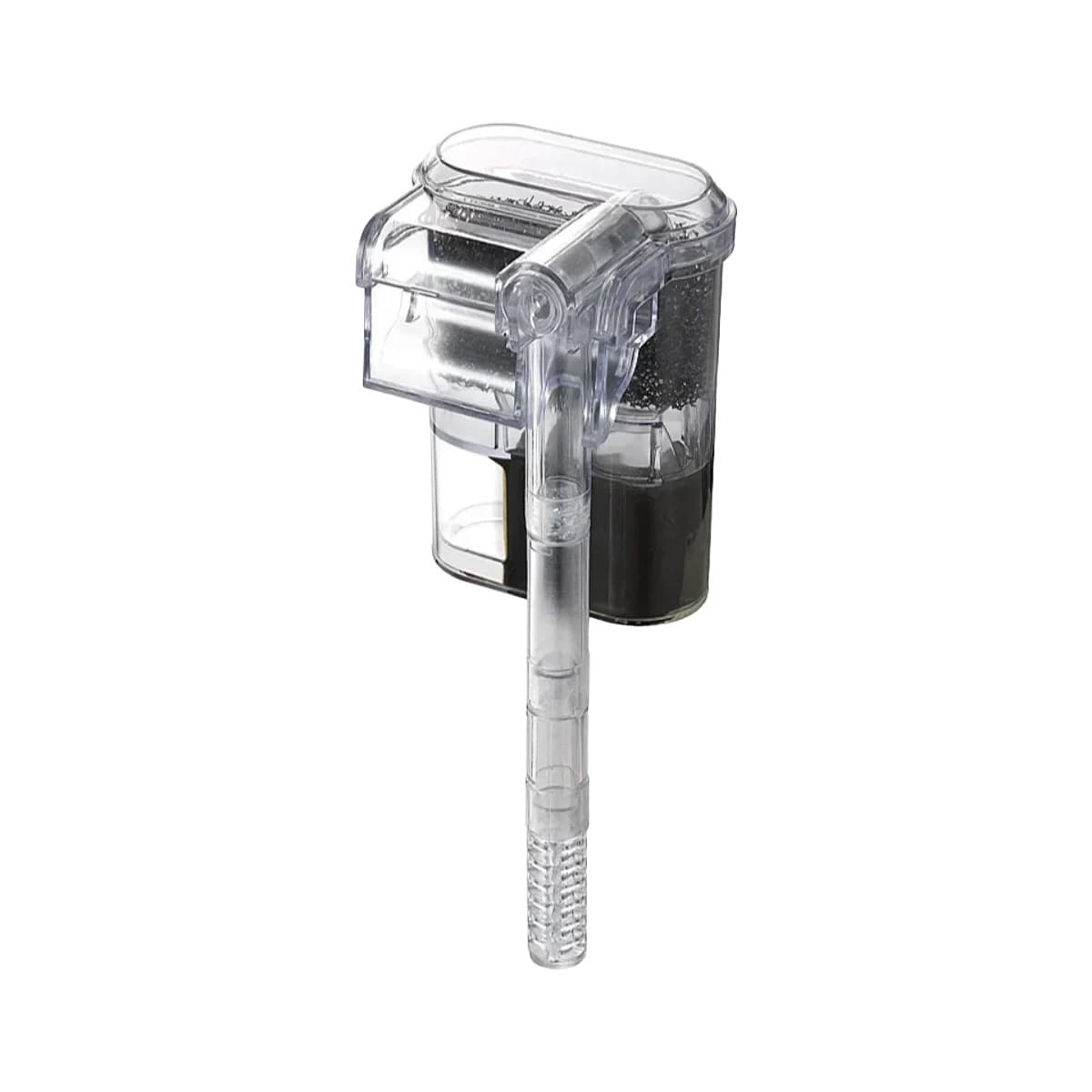
The gear this guide is about
Hang-On-Back Waterfall Filter — 3-Stage, 250 L/H
$17
Picking the "best" filter pump for a small fish tank isn't about finding one magical product. It's about matching the right type of filtration to your tank's size, budget, and inhabitants. Many filter pumps are oversized, too powerful, or just plain overpriced for smaller setups.
The real choice comes down to simplicity, appropriate flow, and effective filtration without disturbing your tank's ecosystem or your wallet.
What Are the Main Types of Filter Pumps for Small Tanks?
For small aquariums, you're primarily looking at three main types of filter pumps: Hang-on-Back (HOB), Internal, and Sponge filters. Each has its place, and understanding their differences is key to choosing wisely.
Hang-on-Back (HOB) Filters
HOB filters hang on the back rim of your tank, with an intake tube reaching into the water and a waterfall-style return that oxygenates the surface. They offer decent filtration capacity for their size.
- Pros: They keep most of the filter body outside the tank, saving internal space. Many offer multiple stages of filtration (mechanical, chemical, biological). The Hang-On-Back Waterfall Filter, 3-Stage, 250 L/H is a good example, offering 250 L/H flow for $16.95. The Nano Hang-On Filter, USB Powered at $17.95 is another option, especially where a USB power source is convenient.
- Cons: The intake can be a hazard for small fish, shrimp, or fry. You often need to add an Intake Pre-Filter Sponge, 9 Pack ($14.95) to protect smaller inhabitants. They can also create a strong current that smaller fish might struggle against, even with a 250 L/H flow. They take up space behind the tank.
Internal Filters
Internal filters sit completely inside your tank, usually attached to the glass with suction cups. They're compact and generally easy to install.
- Pros: They are space-efficient inside the tank. Products like the Three-in-One Built-In Filter are very cheap at $9.95, making them accessible. The Xiten Submersible Filter for $13.95 offers similar benefits. For more features, the 4-in-1 Internal Filter & Pump at $29.95 offers multiple functions.
- Cons:: They take up valuable swimming space and detract from the tank's aesthetics. Many cheaper internal filters have limited media capacity, meaning less biological filtration and more frequent cleaning. They can also have strong flow for smaller tanks.
Sponge Filters
Sponge filters are simple foam blocks weighted at the bottom, driven by an external air pump. Air bubbles rise through a central tube, drawing water through the sponge.
- Pros: They provide excellent biological filtration due to their large surface area for beneficial bacteria. The flow is very gentle, making them ideal for shrimp, fry, and delicate fish. They are cheap to run and easy to clean. A Bio Sponge Filter, 4 Pack costs $19.95, and each unit suits tanks to ~40 L. You will need an air pump, such as the Ultra-Quiet Nano Air Pump for $12.95. This combination is often the best value for money and performance in small tanks.
- Cons: They are not great at mechanical filtration (removing large debris) compared to HOB or internal filters. They require an air pump and airline tubing, which are separate purchases. They are visible inside the tank.
How Much Flow Rate Do You Really Need for a Small Aquarium?
Many hobbyists make the mistake of over-filtering, especially in small tanks. A filter pump that is too powerful can create excessive current, stressing fish and uprooting plants. The goal is gentle water movement that cycles the tank volume a few times per hour, not a washing machine effect.
For most small tanks, a filter that turns over the tank volume 3-5 times per hour is sufficient. Some filters, like the Hang-On-Back Waterfall Filter, 3-Stage, 250 L/H, specify their flow rate in liters per hour. 250 L/H is fine for a small tank, but might be too much for a very small one, especially if the fish are weak swimmers. The 300 GPH Filter Pump at $36.95, for instance, provides 300 GPH (gallons per hour) of flow. This is a very high flow rate for almost any small aquarium and would be suitable only for larger setups or tanks needing extremely aggressive water movement.
When in doubt, aim for less flow. You can always increase surface agitation with an air stone if more oxygenation is needed, without blasting your fish around. For delicate species or fry, a gentle current from a sponge filter is always safer than a powerful pump.
Is an Internal Filter or a Hang-On-Back Filter Better for Small Tanks?
Both internal and HOB filters have their merits for small tanks, but often one is a better fit depending on your priorities.
Space and Aesthetics
If tank space is a premium, HOB filters usually win. The main body of the filter sits outside the tank, leaving more room for plants and fish. An internal filter, even a small one like the Xiten Submersible Filter ($13.95), occupies space inside your carefully designed aquascape.
Filtration Effectiveness
HOB filters generally offer more space for diverse filter media. The Hang-On-Back Waterfall Filter, 3-Stage, 250 L/H clearly states it's a 3-stage filter, meaning it can hold mechanical, chemical, and biological media. This modularity means better and more customizable filtration. You can use Filter Media Foam Pads, 4 Pack ($13.95) cut to size to improve mechanical filtration. Internal filters, especially the cheaper ones like the Three-in-One Built-In Filter ($9.95), often have limited media capacity, relying mostly on a small sponge.
Maintenance and Cost
Internal filters are generally easier to access and clean since they just pull out of the tank. HOB filters can be a bit more fiddly with their various baskets and media compartments. Price-wise, you can find very cheap internal filters, but good quality HOB filters like the Hang-On-Back Waterfall Filter, 3-Stage, 250 L/H are still affordable at $16.95.
For most small planted tanks or tanks with active fish, a well-chosen HOB filter with an intake sponge is usually the better call. It keeps the tank interior clean and offers superior filtration. However, if budget is the absolute tightest constraint and internal space is not an issue, an internal filter can work.
Why Are Sponge Filters Often the Best Choice for Small Tanks?
Despite their simple appearance, sponge filters are champions for many small tank setups, particularly for breeding, quarantine, or shrimp tanks. They are often overlooked by beginners looking for powerful pumps, but their benefits are significant.
Unbeatable Gentleness
The primary advantage of a sponge filter is its extremely gentle water flow. Driven by an air pump like the Ultra-Quiet Nano Air Pump ($12.95), the bubbles slowly draw water through the sponge. This means no strong currents to stress small fish, blow plants around, or trap fry and shrimp. The Fine-Mesh Fish Net, Braided Handle ($9.95) and Telescopic Fish Net, Fine Mesh ($12.95) are designed for catching these delicate creatures, and a sponge filter helps ensure they don't get sucked into the filter in the first place.
Exceptional Biological Filtration
The porous sponge material of a Bio Sponge Filter, 4 Pack ($19.95) provides a massive surface area for beneficial bacteria to colonize. These bacteria are crucial for the nitrogen cycle, breaking down harmful ammonia and nitrite. For tanks up to ~40 L, one sponge filter can provide ample biological filtration, leading to stable water parameters.
Cost-Effective and Reliable
The initial investment for a sponge filter setup is low. A pack of four sponge filters costs $19.95, and a good air pump costs $12.95. They have no moving parts in the water (only the air pump has moving parts), meaning fewer points of failure and less noise from mechanical components in the tank itself. Cleaning involves a simple squeeze in old tank water during water changes.
Versatility
Sponge filters are also ideal for seeding new tanks. You can run one in an established tank for a few weeks, then move it to a new setup to instantly introduce beneficial bacteria, speeding up the cycling process. They are also perfect for quarantine tanks where simplicity and gentle filtration are essential.
For many small tanks, especially those housing delicate inhabitants or requiring budget-friendly, reliable filtration, the combination of a sponge filter and an air pump is the superior choice over more complex, expensive filter pumps.
What About Noise and Aesthetics for a Small Tank Filter?
Small tanks are often placed in bedrooms, offices, or living areas where noise can be a major issue. Aesthetics also play a larger role in small setups, as equipment can easily dominate the view.
Noise Levels
Filter pumps that sit inside the tank can sometimes transmit vibrations directly to the glass, causing a hum. HOB filters often have a "waterfall" sound, which some find soothing and others find annoying. The motor noise of HOB filters can also be a factor. When choosing an air pump for a sponge filter, look for models specifically marketed as "ultra-quiet," like the Ultra-Quiet Nano Air Pump ($12.95). Air pumps can be placed outside the tank and even muffled further by placing them on a soft mat or inside a cabinet.
Visual Impact
Internal filters are visible inside the tank. Even the compact Xiten Submersible Filter ($13.95) will occupy valuable visual space. HOB filters clear the tank's interior but add clutter to the back of the aquarium. Sponge filters are simple but are still a visible piece of equipment in the tank. If aesthetics are your top priority and you're aiming for a pristine, minimalist look, you might need to get creative with plant placement to hide equipment.
For minimal in-tank visual clutter, a HOB filter is often preferred. For minimal noise, an external air pump paired with a sponge filter can be the quietest option if the air pump itself is quiet and well-isolated. There are trade-offs here; sometimes a slightly less visually appealing filter is the quieter or more effective choice for the health of your tank.
Quick answers
- Do small tanks always need a filter pump?
- Yes, every aquarium needs filtration to remove waste and maintain water quality. A filter pump is essential for most small tanks.
- What is the best type of filter pump for shrimp or fry?
- Air-driven sponge filters are often the best choice for shrimp and fry tanks because they create gentle flow and prevent small creatures from being sucked into the intake.
- How do I know if a filter pump is too strong for my small tank?
- If your fish are struggling against the current, or if plants are constantly blown over, the flow rate is too high. Look for filters with adjustable flow or opt for sponge filters.
- Can I run a small tank without a filter pump?
- No, a small tank without a filter pump will quickly accumulate waste and ammonia, harming aquatic life. Filtration is vital for a healthy, stable environment.